
Fin Dents vs. Coil Damage: What to Look For When Unboxing
Unboxing a new HVAC unit is exciting, but it's completely normal to feel a bit concerned if you spot a few bent metal fins on the outer coil. Minor cosmetic imperfections are incredibly common, often happening at the factory during production or in freight transportation.
However, there is a massive difference between a harmless cosmetic fin dent and functional coil damage.
Before you panic or delay your installation, let's look at the scientific data regarding what actually affects your unit's performance, and how to know if you should report a claim.
The Science: How Much Fin Damage Matters?
It's easy to assume that even a small dent will ruin your brand-new unit's efficiency. To find out if that's true, researchers at the University of Texas at Arlington conducted a rigorous study. They intentionally crushed and flattened the fins on air conditioning units in gradual stages to measure the exact impact on cooling capacity and SEER efficiency.
The results surprise most homeowners:
- Up to 40% flattened: When nearly half of the coil's fins were completely dented or flattened, there was no measurable change to the unit's cooling capacity and less than a 5% drop in efficiency.
- 60% flattened: It took crushing more than half of the entire unit's face area before the system experienced its first appreciable performance drop (~4%).
- The takeaway: Aluminum fins are designed with a massive amount of surface area redundancy. Minor, localized dings from shipping or handling have zero impact on how well your system cools or how much electricity it uses.
How to Tell the Difference (With Examples)
To help you inspect your unit confidently, use this quick guide to separate cosmetic blemishes from actual shipping damage.
1. Cosmetic Fin Dents — Safe to Install
The thin, aluminum "hairline" slats on the outside of your unit are called fins. They act like a radiator, allowing air to pass through. Because they are as thin as a soda can, even a gentle touch during packaging or transit can bend them.
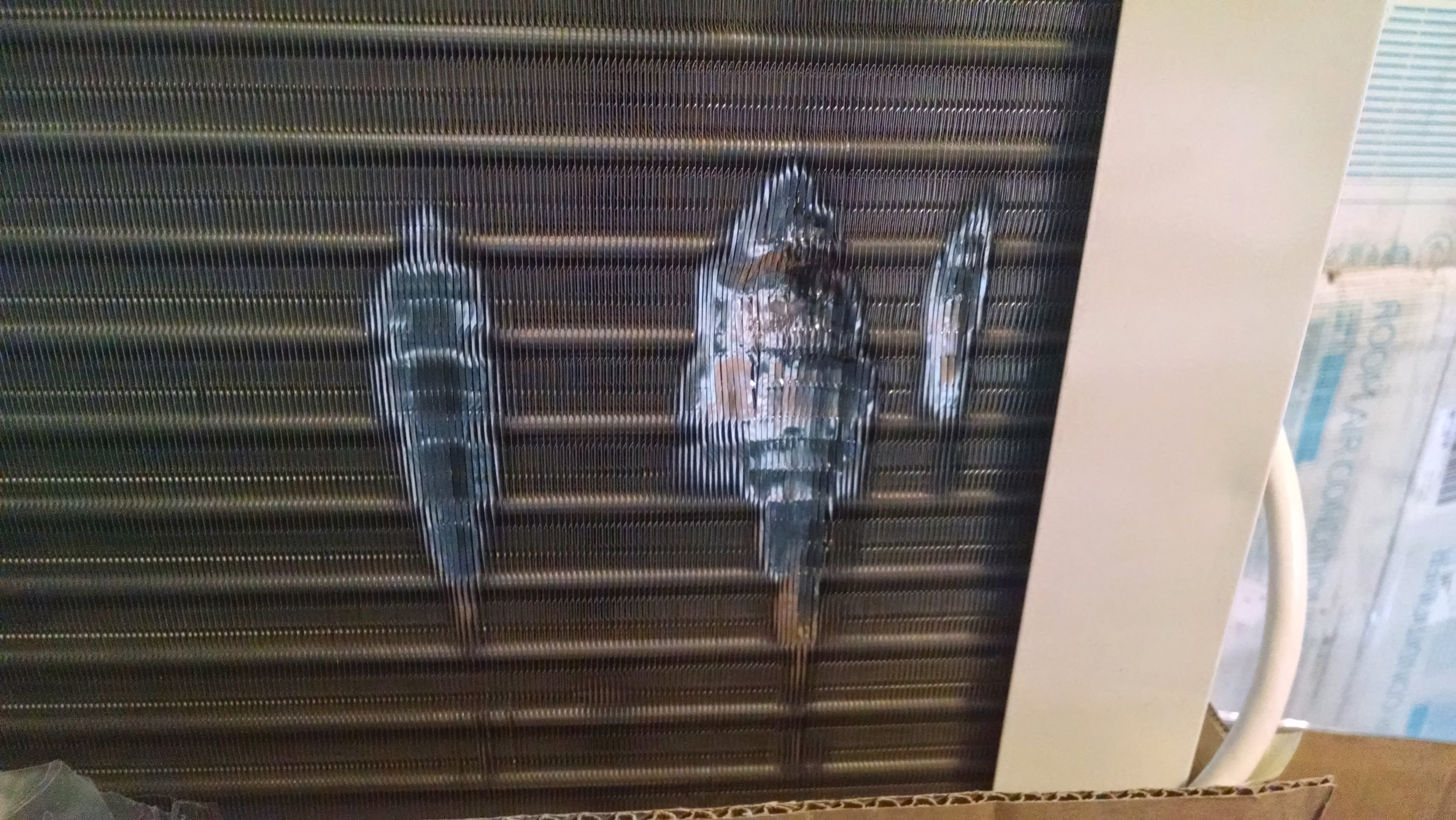
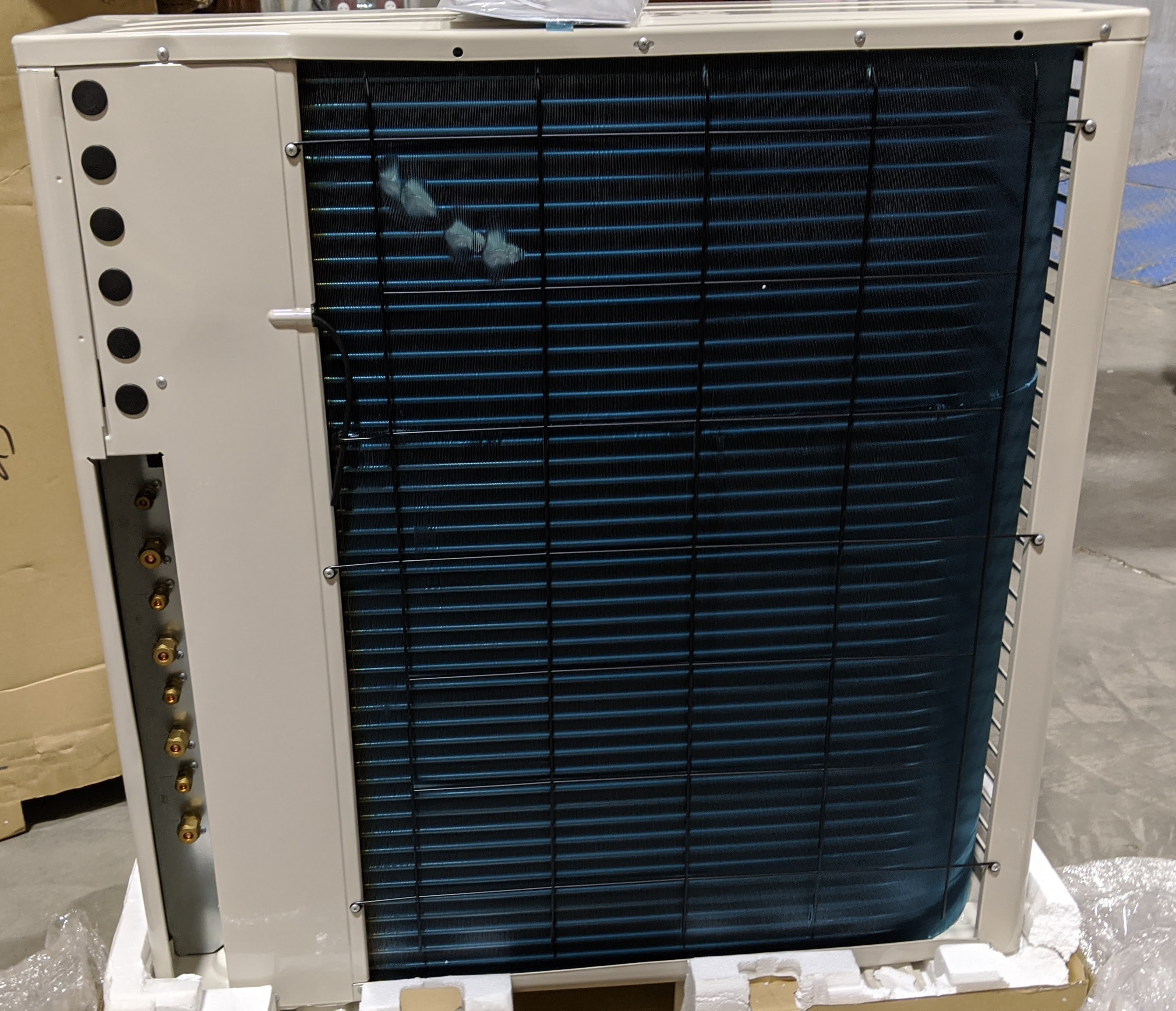
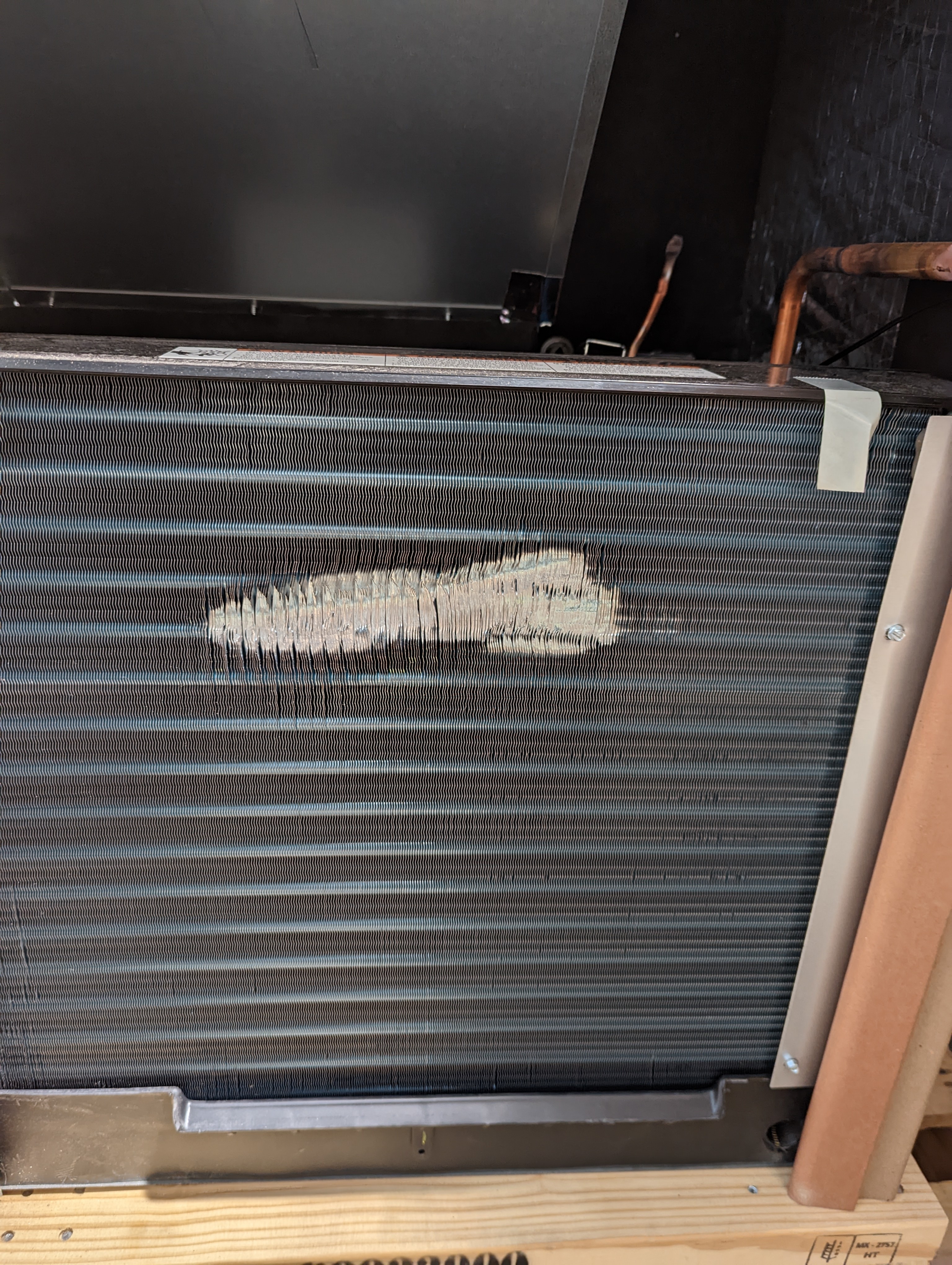
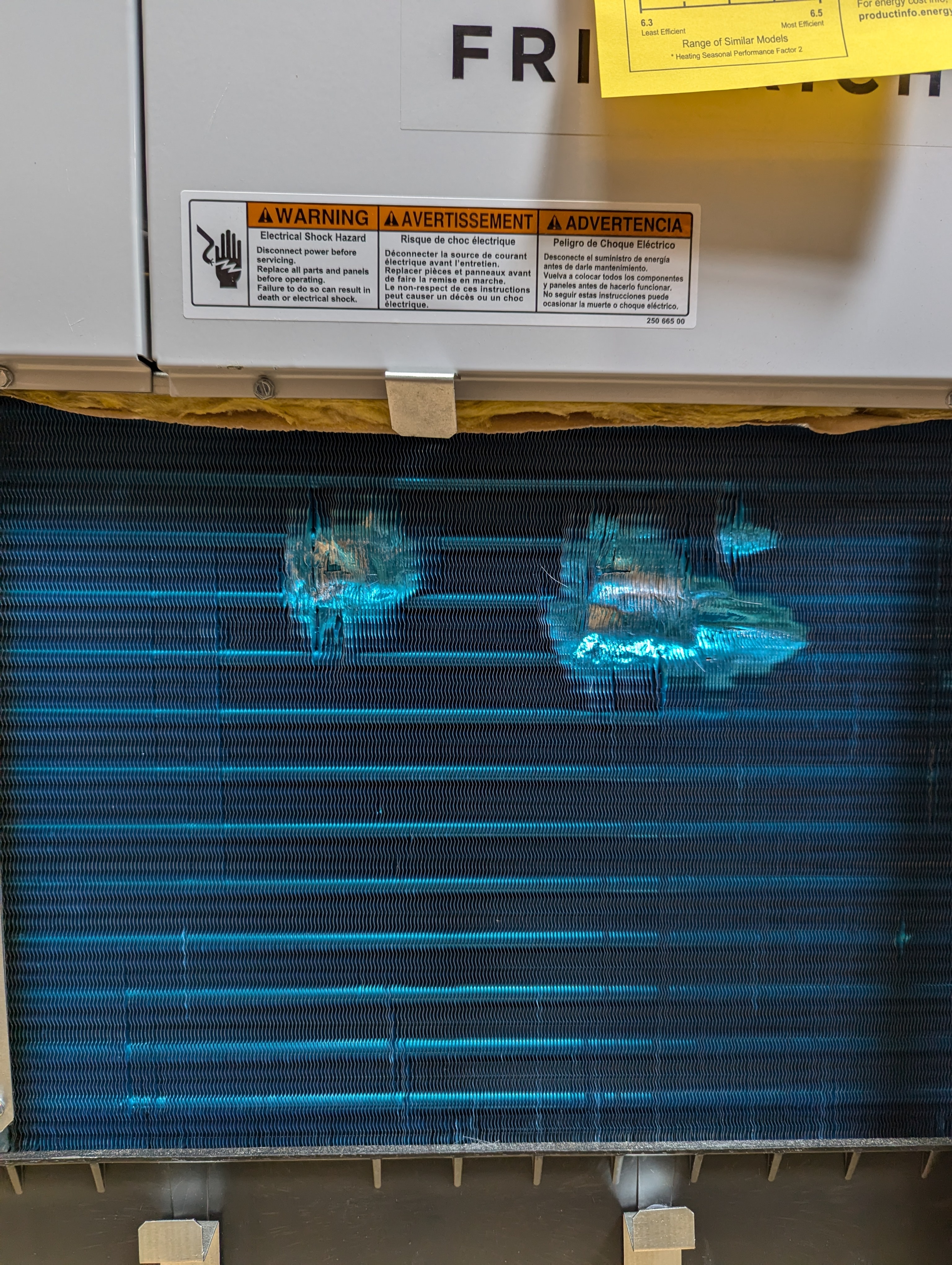
- What it looks like: A localized patch of crumpled or flattened aluminum fins (often the size of a hand or a baseball). The copper tubing underneath is completely intact.
- Does it matter? No. As long as it covers less than 15% of the total unit, it is purely cosmetic.
- The fix: If the aesthetics bother you, a tool called a fin comb can straighten them right back out in seconds. It is completely safe to proceed with your installation.
2. Functional Coil Damage — Report Immediately
The actual "coils" are the heavy-duty copper or aluminum tubes running behind the thin fins. These tubes hold the high-pressure refrigerant gas that cools your home.
- What it looks like: A deep, violent impact that has bent, crimped, or punctured the thick horizontal tubes. You may also see an oily residue pooling around the area (this is compressor oil escaping with a refrigerant leak).
- Does it matter? Yes. A crushed or punctured tube restricts refrigerant flow or causes a system leak, which will prevent the system from working.
- The fix: Do not install the unit. Take clear photos and contact our support team immediately so we can file a freight claim and get you a replacement.
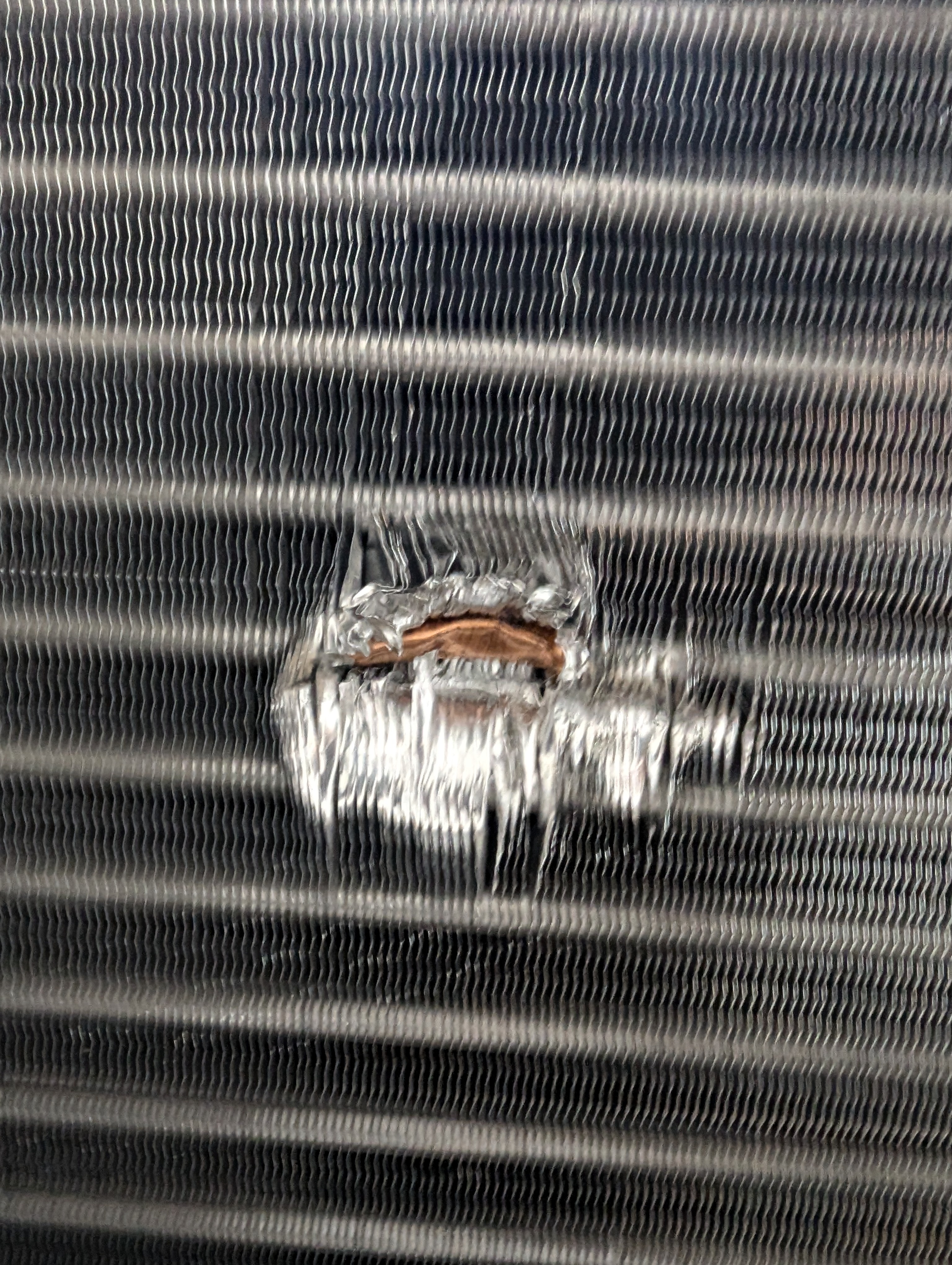
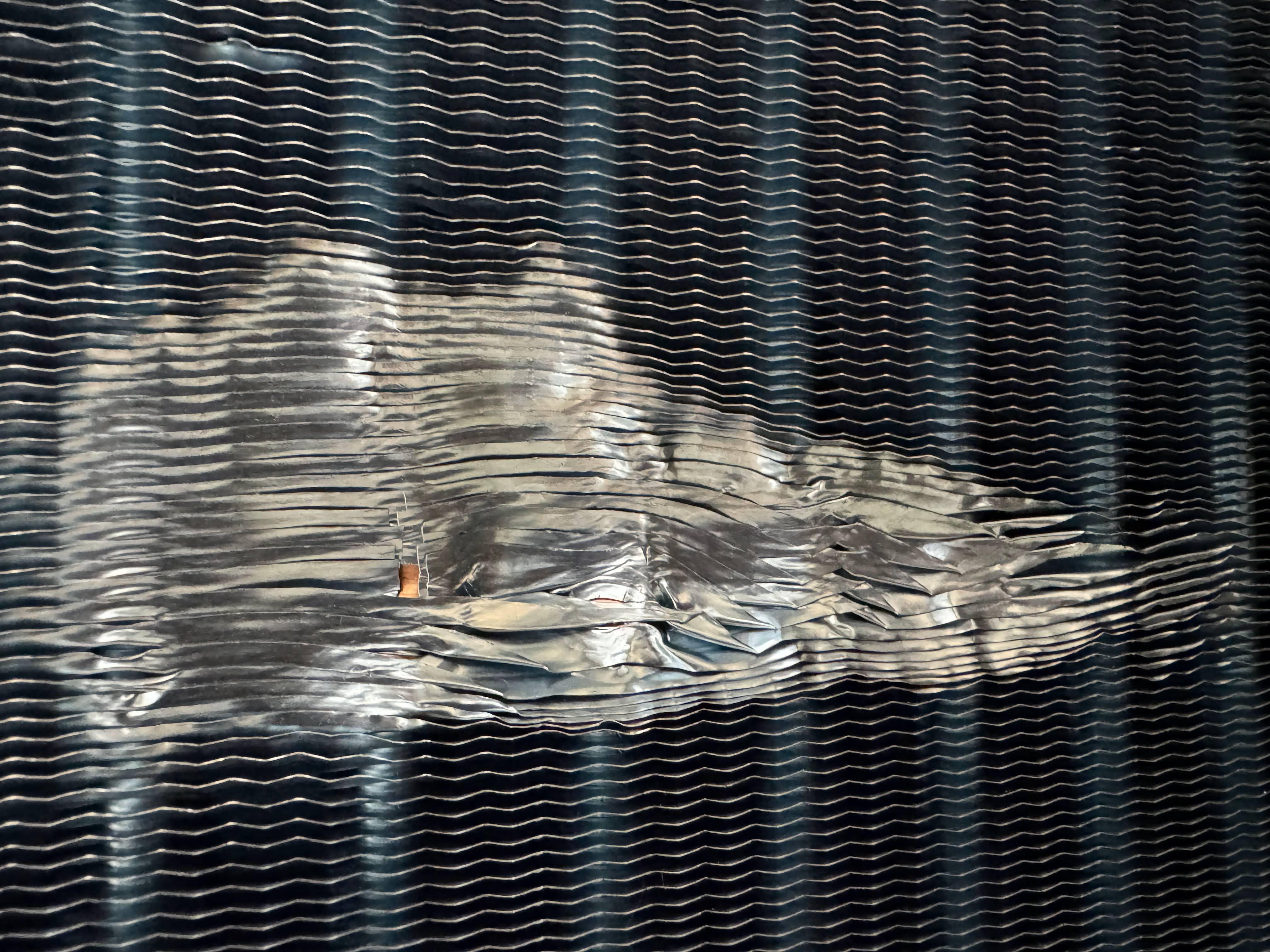
Because HVAC units are heavy, large-freight items, shipping costs are substantial. To keep our prices low and prevent unnecessary project delays, we enforce strict policies regarding what constitutes transport damage versus acceptable cosmetic blemishes.
Refusing a freight shipment because of minor, cosmetic blemishes leaves the unit stranded in transit and incurs massive return shipping fees.
- The policy: If a delivery is refused for cosmetic fin dents that cover less than 15% of the total surface area, we reserve the right to deny a replacement unit and cancel the order. Furthermore, we reserve the right to refuse future shipments or business with that customer.
- Why? As the scientific data shows, minor fin dents do not affect the performance, lifespan, or efficiency of your unit. Refusing an undamaged, fully functional system creates unnecessary waste and shipping overhead.
Once you sign for a freight delivery, liability shifts. The freight carrier will automatically deny any claim for damage reported after they leave.
- The policy: All visible damage must be explicitly noted on the Delivery Receipt (BOL) at the exact time of delivery before the driver leaves. If structural or tube damage is discovered later but was not noted on the delivery receipt, we cannot assist with a freight claim, return, or replacement.
- What to do: Inspect the box or crate thoroughly while the driver is present. If you see deep punctures or structural damage, write "Damaged upon receipt" on the paperwork before signing, or refuse the delivery only if the inner tubes are compromised.
We want you to be completely satisfied with how your new system looks, even if the minor dings are entirely hidden under the protective outer grille.
- Our promise: If your unit arrives with minor, cosmetic fin dents, simply take a quick photo and report it to our customer support team within 48 hours of delivery. We will gladly ship a professional fin-straightening comb to you free of charge so you or your installer can easily dress up the fins to look brand new.
Summary Checklist Before Signing
Before the delivery driver leaves, perform this quick inspection:
- Step 1: Inspect the packaging. Look for heavy impact marks, forklift punctures, or crushed corners.
- Step 2: Check for structural damage. If the box is torn, look inside. Are the thick internal refrigerant tubes bent, crimped, or leaking oil?
- If yes: Note the damage on the receipt and refuse the delivery.
- If no (just minor bent fins): Accept the delivery, sign the receipt noting the damage, and contact us for your free fin comb if needed.
